

 English

 English
 Español

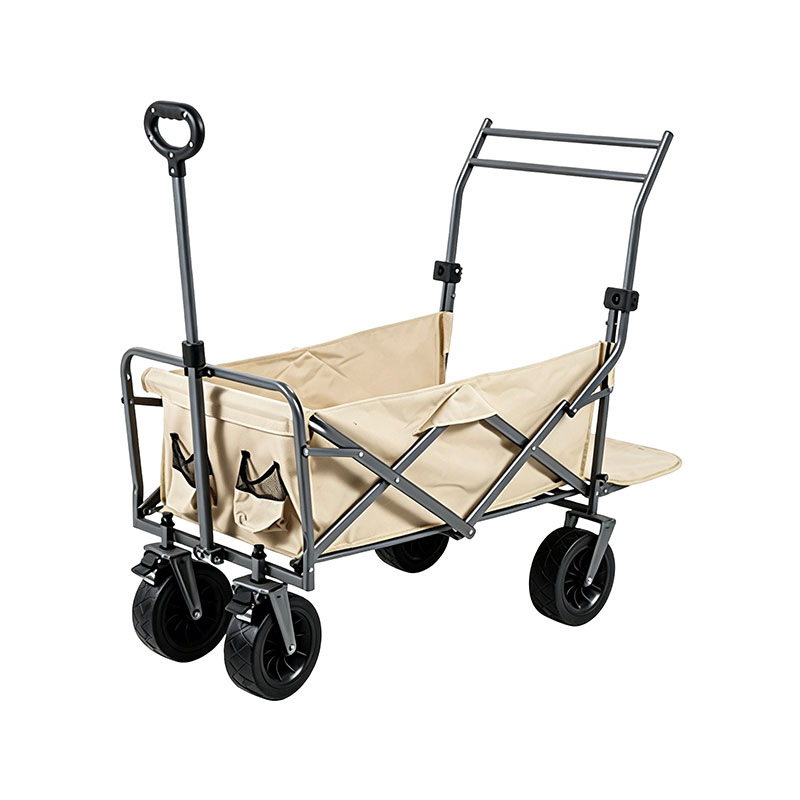
A market vendor does not carry camping gear. They carry the stock, the display, the cash box, and the tent weights. The wagon that serves the market is not the same as the wagon that serves the campsite. The commercial version has to take more load, roll over more pavement, and fold into the van at the end of the day. The Commercial Folding Camping Wagon For Market Supplier builds the wagon for that job.
The Load Is the Difference
A camping wagon carries chairs, a cooler, and a tent. A market wagon carries the produce crates, the canned goods, the display racks, and the generator. The load runs from 80 to 150 kilos, sometimes more. The commercial folding camping wagon for market supplier has to specify a frame that holds that weight without twisting.
The frame is steel, not aluminum. Steel is heavier but stronger. The vendor is not carrying the wagon to the campsite. The wagon rolls on the pavement and folds into the van. The weight is not the concern. The load capacity is.
The fabric body is a heavier denier with a reinforced base. The produce crates have sharp corners and the canned goods are heavy. The base of the wagon has to take the abrasion without wearing through.
The Wheels That Roll on Pavement and Cobblestone
The market terrain is pavement, cobblestone, and the occasional gravel lot. The wheels are the larger pneumatic or solid rubber type. The pneumatic wheel absorbs the cobblestone vibration. The solid wheel does not go flat on the glass or the nail in the parking lot.
The commercial folding camping wagon for market supplier has to offer the wheel options and explain which one suits the market surface. The vendor who rolls over cobblestone every Saturday needs the pneumatic tire.
The Fold That Fits the Van
The vendor loads the wagon into the van at the end of the market day. The folded wagon has to fit alongside the unsold stock and the display. The folding mechanism has to be fast. The vendor is tired and the van is full.
The commercial wagon folds flat but not as compact as the camping version. The load capacity and the frame strength take priority over the folded size. The supplier who balances the two serves the vendor who needs the strength and the fit.
Here is what the supplier has to deliver:
- Steel frame rated for the market load
- Heavy denier fabric with a reinforced base
- Pneumatic or solid wheels matched to the market surface
- Fast folding mechanism for the end of the day
- Folded size that fits the van alongside the stock
- Handle that takes the pulling load
Where the Market Wagon Sells
The farmers market vendor uses the wagon to move the produce from the van to the stall. The flea market seller uses it for the boxes and the display. The event vendor uses it for the equipment and the stock. Each one needs the load capacity and the fold.
The Wagon That Fails Under the Crates
The frame twists under the produce crates. The fabric tears at the base. The wheels sink into the gravel. The fold jams with the dirt in the hinge. The commercial folding camping wagon for market supplier who tests the wagon under the market load delivers a cart the vendor uses season after season.
A commercial folding camping wagon for market supplier builds the cart that moves the stock. The frame carries the load. The wheels roll on the pavement. The fold fits the van. Choose a supplier that specs the wagon for the market, not the campsite.
 Previous